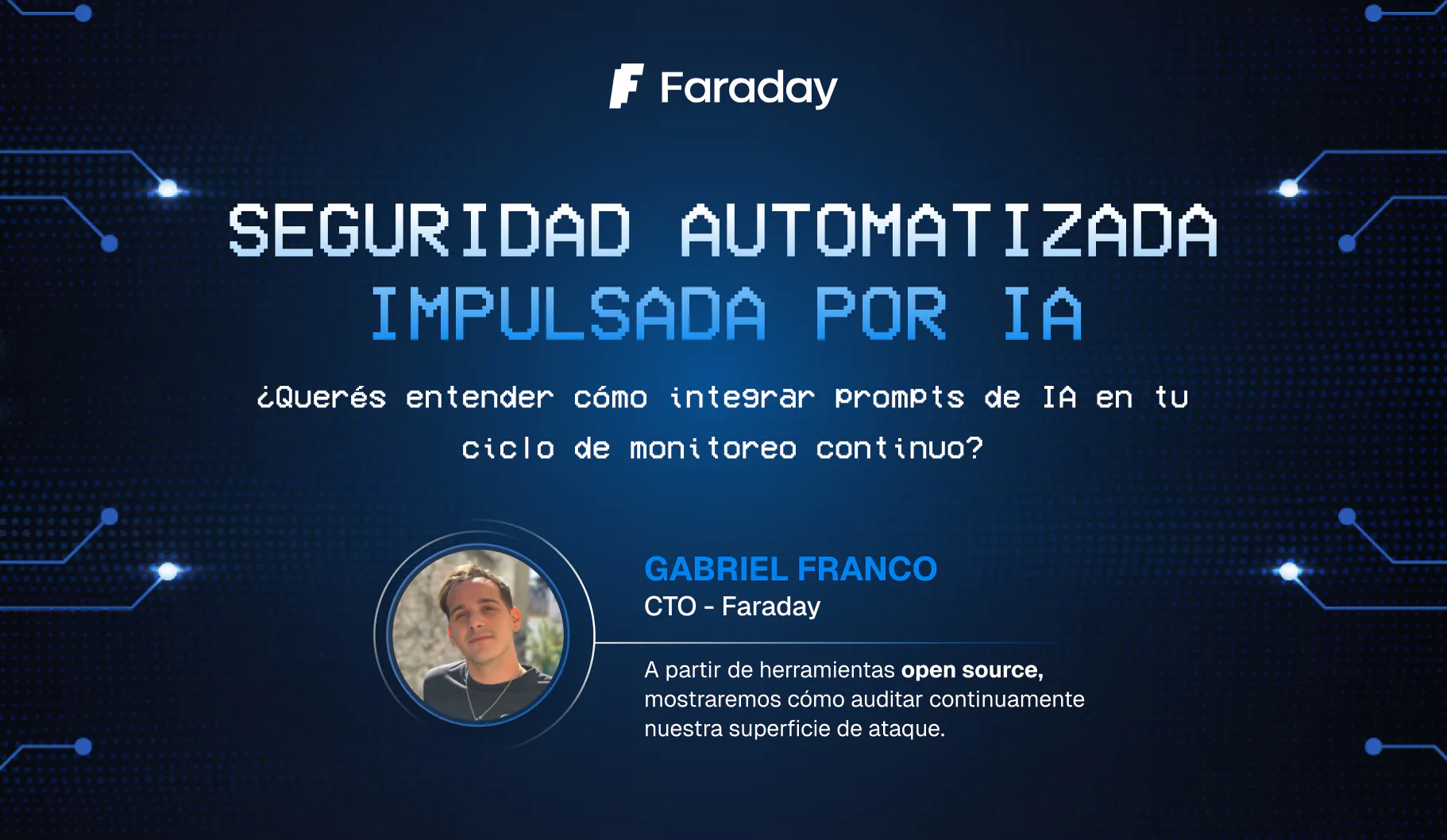
Automated Security with AI | How to Move to Continuous Monitoring with Gabriel Franco

April 17, 2026

In this Faraday webinar, we explore how to move from a traditional vulnerability management approach to a continuous security monitoring model by combining automation, artificial intelligence, and open-source tools.

👉 If you work in cybersecurity, AppSec, pentesting, or IT, this session will give you a practical perspective on how to scale your processes without losing visibility.

You’ll learn:
How to automate security monitoring
How to detect vulnerabilities in real time
How to improve visibility across your attack surface
How to shift from a reactive approach to a continuous model
How to apply AI to cybersecurity processes

🎙️ Speaker:
Gabriel Franco — CTO at Faraday
Continue Reading

The latest handpicked blog articles

A hands-on workflow for running pentests with Claude Code or Codex, validating real vulnerabilities, and sending confirmed findings directly to Faraday.

September 8, 2026

The open letter on collective cyber defense puts information sharing at the center of its proposal, for cybersecurity companies, governments, and frontier AI companies alike: “Share threat intelligence and tested

August 30, 2026

One of the most technically specific points in the open letter on collective cyber defense is this one: “Build observability and security tools, ensure agentic identities are traceable and accountable,

August 30, 2026

Stay Informed, Subscribe to Our Newsletter

Enter your email and never miss timely alerts and security guidance from the experts at Faraday.

Faraday provides a smarter way for Large Enterprises, MSSPs, and Application Security Teams to get more from their existing security ecosystem.

Headquarters

Research Lab & Dev

Solutions

Open Source

© 2025 Faraday Security. All rights reserved.
Terms and Conditions | Privacy Policy
#zsiq_float, .zsiq_floatmain, [id^="zsiq"], [class^="zsiq"], iframe[id*="salesiq"], iframe[title*="chat" i] { display: none !important; visibility: hidden !important; opacity: 0 !important; pointer-events: none !important; }