The vulnerability landscape is scaling beyond what traditional systems can handle.
In 2025, NIST enriched nearly 42,000 CVEs – 45% more than any prior year – yet it still wasn’t enough to keep up with the growth in CVE submissions, which increased significantly between 2020 and 2025.
This trend is not slowing down.
As a result, NIST has updated how the National Vulnerability Database (NVD) operates (read more). And this is not just an operational change. It’s a shift in how vulnerability management works.
The problem: too many vulnerabilities, not enough time to analyze them.
Faraday v5.20 introduces improvements to the vulnerability management platform, focusing on improving exactly that. Managing vulnerabilities at scale is not just about collecting findings. It’s about being able to navigate, understand, and act on that data without friction.
Rather than adding complexity, this release improves how the platform behaves when dealing with real-world environments: large datasets, repeated vulnerabilities, and teams that need clarity and speed.
Let’s take a look at what’s new.
Highlights
Better Organization with Vulnerability grouping
Faster performance across the platform
Improved access security
Better Organization with Vulnerability Grouping
As NIST shifts to a risk-based model and stops enriching every CVE, security teams are left with more raw data and less context. Vulnerability grouping fills that gap—bringing structure where the ecosystem no longer does.
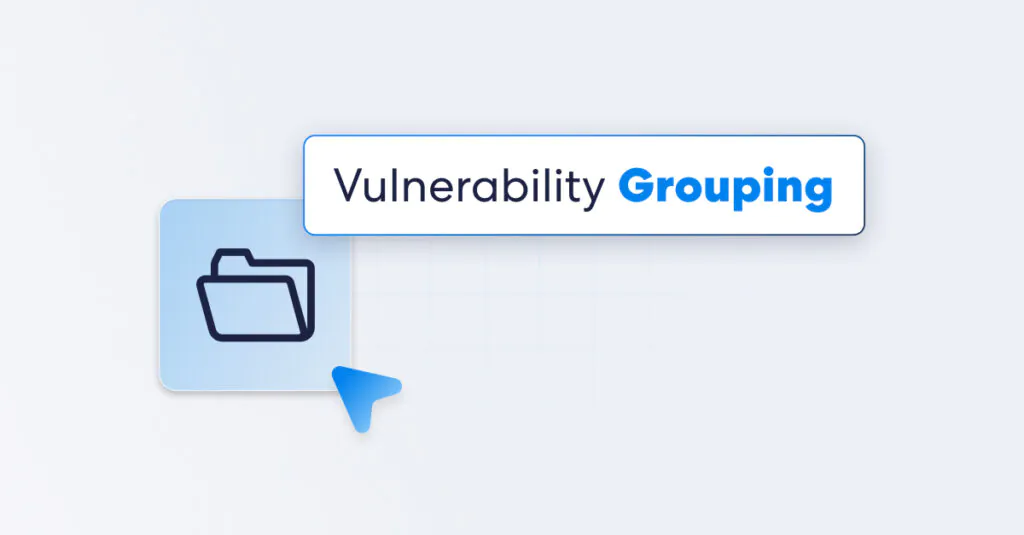
Vulnerability Grouping, allows teams to consolidate similar findings into structured groups. By grouping vulnerabilities based on shared CVEs or name similarity—and allowing configurable matching thresholds—Faraday helps rebuild the context that is no longer consistently provided externally.
As CVE volume continues to grow, the challenge is no longer just handling more data, but dealing with duplication, fragmentation, and repeated patterns across findings. Grouping transforms large, noisy lists into structured clusters.
This also enables a more practical approach to risk-based triage. When not all vulnerabilities carry the same weight, teams need a way to quickly identify what actually matters.
This can be done in two ways:
Automatic grouping, based on criteria such as vulnerability name or CVE
Manual grouping, where users define their own groups based on context
Both approaches can coexist, allowing teams to combine automation with manual control. Furthermore, in a world where not all vulnerabilities are enriched, having a solid structure becomes critical
Take a look to our documentation and give it a try
Faster performance at scale
Performance is not a feature, it’s a requirement.
We continue to improve performance with Faraday v5.20, making the platform faster and more responsive. Internal queries have been optimized to speed up navigation across multiple views, and bulk vulnerability updates are now quicker and more memory-efficient.
The result: a smoother, lighter experience when navigating your daily tasks.
Enhanced Access Control
Faraday v5.20 enhances access control mechanisms, reinforcing how user identities are validated across the platform.
This leads to improved access governance and stronger platform security.
Built for the shift
Faraday v5.20 aligns with a broader industry reality:
Vulnerability management is no longer about coverage
It’s about clarity and prioritization
By improving performance, structuring vulnerability data, and reducing noise, this release helps teams:
- Move faster
- Focus on real risk
- Operate with less friction
The industry is moving toward prioritization by necessity.
When even the NVD can’t keep up with vulnerability volume, teams need better ways to understand what actually matters.
Faraday v5.20 is a step in that direction.
Your feedback continues to shape our roadmap. If you have questions or suggestions, contact us at support@faradaysec.com
See you in the next release 🚀
Documentation:
Homepage
Documentation
Download
Issue tracker and feedback
Frequently Asked Questions
Twitter