
En la era de DevOps y las metodologías ágiles, donde la velocidad de entrega y la innovación constante son moneda corriente, la gestión eficaz de la seguridad se vuelve más crítica que nunca. Aquí es donde entra en juego la ‘gestión de la superficie de ataque’ (ASM), cuyo objetivo es detectar, identificar y gestionar las vulnerabilidades que puedan surgir en el día a día, pero de forma continua.
En Faraday, hemos desarrollado ‘First Scan’ utilizando tecnologías Open Source para ayudar a nuestros clientes a dar sus primeros pasos en ciberseguridad. Ayuda a visualizar, identificar y rastrear el nivel de exposición de una empresa y los riesgos asociados. First Scan explora la web en busca de huellas de los dominios y subdominios expuestos de la empresa, proporcionando información clara y precisa sobre el estado de la superficie de ataque.
First Scan es la principal herramienta utilizada por nuestro equipo rojo y nace de la metodología que emplean para sus tareas ofensivas. Esta metodología consta de los siguientes pilares:
Identificación de activos: Utilizando diferentes estrategias, intentamos comprender y detectar dónde se encuentra la infraestructura, qué tecnología emplea y qué servicios están expuestos.
Evaluación: Una vez creada una lista de activos y servicios, procedemos a identificar posibles fallos o configuraciones inseguras de los servicios, lo que permite mitigar rápidamente las posibles vulnerabilidades introducidas en las operaciones cotidianas.
Priorización: No todos los riesgos son iguales. Descubrimos los más críticos y los priorizamos en función de la facilidad de explotación y el impacto potencial.
Reducción de riesgos: First Scan ayuda a aplicar estrategias para reducir nuestra superficie de ataque: controles de seguridad, parches de vulnerabilidad y aplicación de las mejores prácticas en nuestras operaciones diarias.
Aseguramiento continuo: La ASM es un proceso frecuente que se adapta a los cambios naturales de los equipos de ingenieros y proporciona información rápida sobre la seguridad.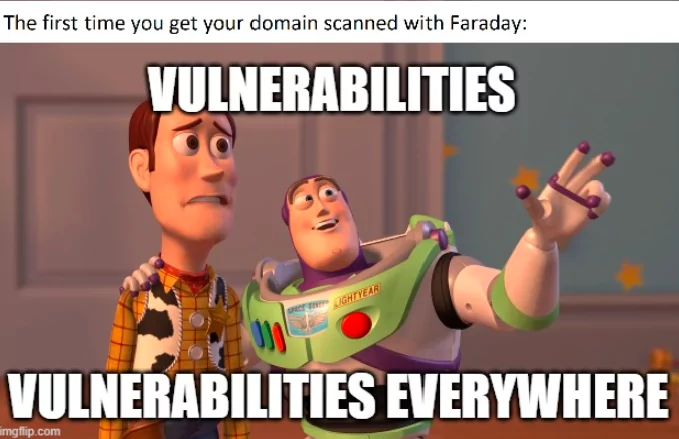 Incluso las grandes empresas con equipos de seguridad completos y eficaces son vulnerables. En este sentido, ¿qué les queda a las start-ups mucho más pequeñas sin equipos de seguridad dedicados?
En este contexto, en Faraday hemos decidido ofrecer una forma única, rápida y segura de escanear uno o varios dominios y descubrir los puntos débiles por los que podrían infiltrarse los atacantes.
Las preguntas son: ¿Sabías lo grande que es tu superficie de ataque? ¿Cuándo fue la última vez que comprobó lo expuesta que estaba su infraestructura?